

I firmly be concurrent periodization is the best method for training athletes. I am willing to concede that other methodologies work for powerlifting depending on the lifter (although most are concurrent in nature…). Below is a general guide for how I run max effort work with high school athletes.
STEP 1: Decide If It’s Even Needed.
Be honest about what you need here. If your athletes cant goblet squat half their body weight maybe max effort work doesn’t need to be an immediate focus. New athletes need basic volume building basic movement patterns. Max effort work is a privilege in my weight room. Minimum criteria must be met in order for me to trust you to do max effort work.
Assessing Max Effort Readiness (this list is neither exhaustive or set in stone. I always use my “coach’s eye” to assess readiness)
I usually like to see an athlete for 6-8 weeks prior to any sort of max work. This allows me to see how they move, work, and progress.
I need to see a mastery of the basic technical skills associated with the lifts. Athletes are usually ready for max bench work before they are squat work. It’s just how it works out. I need to see at least B+ level work if I were to grade it to feel confident pushing towards max effort work.
They have to demonstrate full understanding of all safety protocols such as spotting and use of safeties.
They DO NOT need to meet strength minimums. Since max effort work is the fastest way to dip into the deepest motor units available, it is okay for beginners if they can cover the first few points but I’d usually keep them on stuff that is a bit less invasive like a high board press or block pull to start and then hammer volume on full ROM work through accessories after.
STEP 2: Decide Frequency
We do three true max effort upper movements every month and two lower. You now know that we don’t do max effort every week. High schoolers still need volume, the week’s we don’t do true max singles we are usually still working to a top effort set which is technically “rep effort” work but we could argue semantics here and call that pseudo-max effort…
Anyways, we do one heavy squat and one heavy deadlift. The squats we rotate through are a straight weight box squat or a pin squat. That’s it. It is truly that simple. The deadlifts we use are a sumo deadlift from the floor, 2 mats (~1.5”) or 4 mats (3”). We do A LOT more variations on our accessories which we will talk about eventually in a different article.
We cycle through a handful more bench movements. Standard full ROM bench press, 1, 2, & 3 boards, floor press, and then overhead press.
Lower Body Max Schedule SQUATS—We usually follow an 8 week cycle for our first lower body day (squat focus) as follows:
Week 1: Paused Box Squat
Week 2: Speed Box Squats
Week 3: Speed Pin Squats
Week 4: Rep Effort Box Squats
Week 5: Pin Squat Max Effort
Week 6: Speed Pin Squats
Week 7: Speed Box Squats
Week 8: Rep Effort Pin Squats
This can vary if I think we need more volume vs. speed work. In that case I just swap in more rep effort work which could be as simple as telling the kids to work to a “Top 8” over the course of 5-8 sets. Don’t overthink extra volume as long as it lines up with the rest of the week.
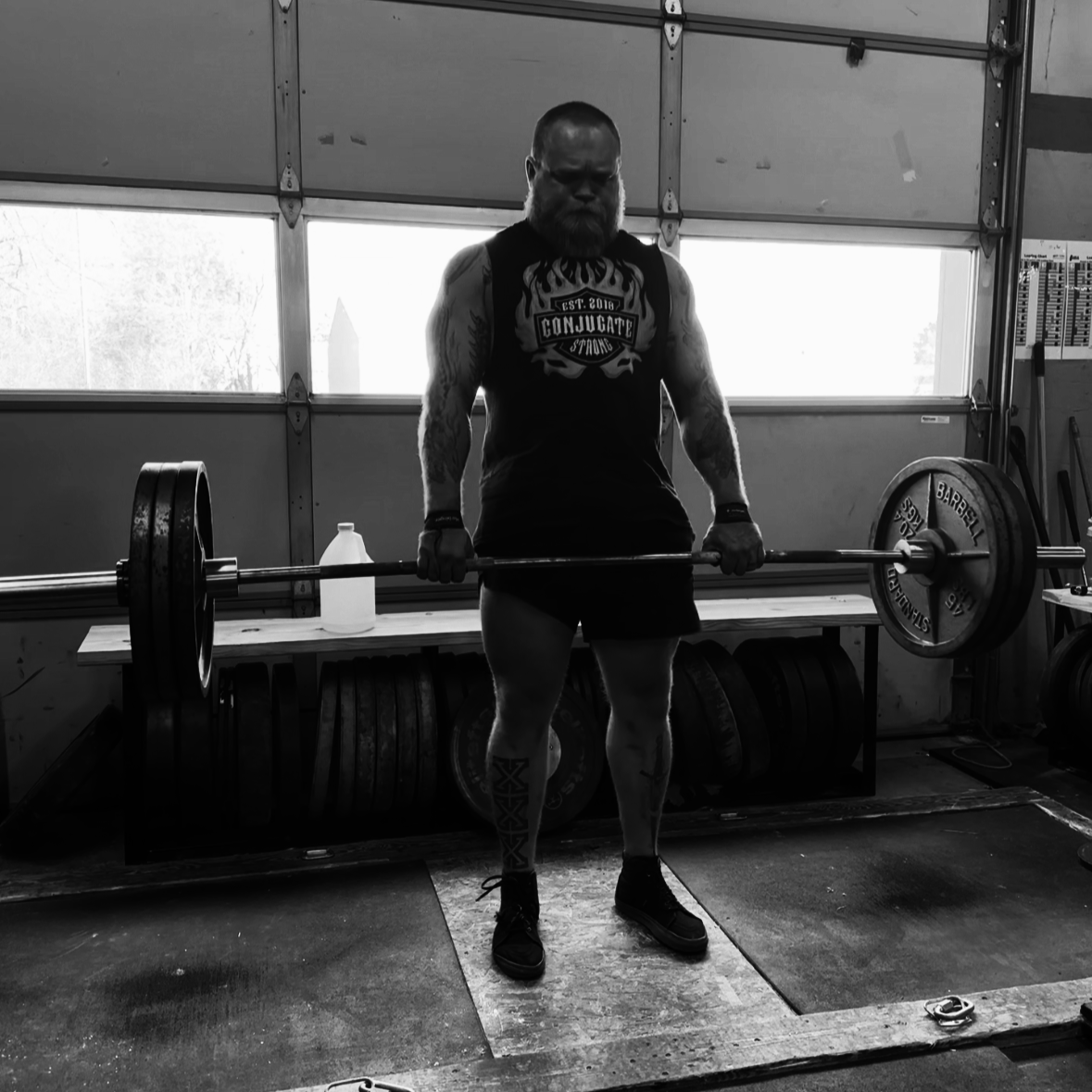
Lower Body Max Schedule DEADLIFTS—We usually follow a 4 week cycle for our second lower body day (deadlift focus) as follows:
Week 1: Straight Weight Speed Deadlifts
Week 2: Straight Weight Rep Effort Deadlifts
Week 3: Banded Speed Deadlifts
Week 4: Max Effort Deadlift (sumo deadlift, 2-mat deadlift, or 4-mat deadlift)
Weeks 1-3 are usually the same but can change based on what we need. If I have an exceptionally young group I will push more volume work than speed work or at minimum do their “speed” work at heavier intensities. Week 4 rotates through those lifts with the goal being to just translate the weight from the 4-mat to the 2-mat to the floor. For example: Johnny hits 455# on the 4-mat, the next month he aims to hit 455# to the 2-mat, then the following month he aims for that off the floor. We then move back to the 4-mat and run it again. Athletes are told to aim for 5# PR’s first but take more if the day allows without much resistance.
Upper Body Max Schedule —We usually follow an 8 week cycle for our first upper body as follows:
Week 1: Max Effort 3-Board Bench
Week 2: Overhead Press Rep Effort
Week 3: Max Effort 2-Board Bench
Week 4: Max Effort Floor Press
Week 5: Max Effort 1-Board Bench
Week 6: Max Effort Overhead Press
Week 7: Wildcard* Rep Effort
Week 8: Max Effort Bench Press
The board work functions like the mats on deadlift—work the weight down then restart at the top. Take more when the day allows. The *wildcard variation* is usually whatever I think is lagging most based on the last round of data.
I will occasionally throw reverse mini band max effort bench or a football bar rep effort top set work in. These two things don’t get used often but are good to break up monotony and allow the kids to push with something else once in a while. It is that simple. Throwing a curveball to them is fun and keeps training interesting.
I use backdown sets sparingly. Most volume is placed into the accessory work. It’s easier for weight room flow to have kids move out of the racks so others can move in.
Lastly here, I will regularly forego a max variation and push close grip rep effort on whatever that variation was supposed to be for the day if I think we need more triceps OR full ROM rep effort work if I think we need more chest. But again, I usually let the accessories take care of this sort of thing.
What About The Kids Who Aren’t Doing Max Effort?
They are typically doing rep effort work on the same daily programmed movement. So if the older kids are doing a max 2-board, the new kids will do 2-board rep effort work. This is typically 5×5 towards a top set. This ensures three things happen really effectively. The first is that they get some decent volume in. The second is that they push the threshold on intensity and learn to strain. And the third is they get to stick with the group and learn how to do everything the group does.
STEP 3: Let The Magic Happen
Time is crucial. You must give it time to work. “Trust the process” might be cliché but it’s exactly what we need here. Aim for regular 5# PR’s. Hold your standard high. Be consistent and let your plan play out.
Thank you for reading this entire article, I truly appreciate your support.
Here is a 40% off your entire order for all remaining stock at conjugatestrong.bigcartel.com
Use code: THANKS26
Expires: 10/31 @ Midnight
This code does not work on the new fall drop.
