

So you want to hire a coach?
Imagine your car is broken and needs to be fixed. You go to a mechanic and get a professional opinion and pay them for their time. While you’re there you find out the mechanic has a website where they post videos explaining how to fix cars. You decide to take your car home, watch the videos, and based on their recommendations try and fix your car yourself with no real knowledge of the inner workings of an automobile. Oh, you also piss in the gas tank a few times because you saw a related video online from someone who went to burning man say that urine helps the long-term performance of the car. You inevitably mess the car up further because you actually have no idea what you’re doing and then you post a review on the mechanic’s webpage saying that they ruined your car and not to go there.
This is what it’s like when you hire a coach, go off program, and make external decisions that undermine optimal athletic performance. If you hire a professional to do a job that they’ve done over and over with countless others prior, successfully, but have better ideas, why don’t you just pursue your better ideas in the first place? And if you start changing stuff because you just know better don’t act surprised when your coach calls you out on your crap.
My product is probably 10% program and 90% feedback + results. The results are really what people pay money for. It isn’t a truly tangible product that you can just simply buy and “use”. It’s a flexible and ever evolving service that varies greatly person to person. My livelihood depends on whether you perform well or not and whether you perform well or not is mostly linked to how well you can follow and execute directions. If you go off program and undermine performance by making choices detrimental to the goals we set, I do not want you to be associated with my product. Because at that point you’ve made enough changes to it that it is no longer my product. What that tells me is that you’re not serious about this from a fundamental standpoint. And at the end of the day I refuse to lower my standards because you cannot find a way to raise yours.
So what can you do to be a better athlete working with a coach?
Set Your Standards Higher
Well, the first thing you need to do is to create boundaries and set standards for yourself that are higher than they’ve ever been before. You may have thought that because you’ve now committed to paying money to and checking in with someone regularly that you’ll automatically raise your standards but that’s not always the case. It takes weekly, daily, even hourly efforts to hold yourself accountable on not only the big things but the small things too. Getting your meals in, getting enough sleep, NOT taking that extra jump in the gym you know you shouldn’t, are all examples of things you NEED to tighten up if you want to progress optimally.
Tightening these up is difficult though. Gaining weight? HARD. If you’ve done it before you know that you get to that point of eating each day where you feel sick, bloated, and can’t breathe but you still have half of your dinner left. Bite down and get it done. You’re the only person in charge of your decisions and your adherence to these standards and boundaries is your responsibility. How well you adhere to these high standards is a very good indicator of your future success. I can tell you that the athletes of mine that set these standards high and uphold them perform far better than those that don’t. I, as a primarily online powerlifting coach, cannot be there to hold your hand through these.
Communication
Next, you’ll have to be on top of your communication. That is assuming you chose a coach who cares enough to communicate with you (if they don’t, I suggest finding another coach). Real coaching requires collaboration and regular feedback. Without feedback and subsequent adjustment, coaching actually becomes watered down programming and while you can make progress on that, finding a coach who is actually invested and flexible with the plan is paramount to real success. But YOU have to communicate.
Oftentimes coaches have a decent sized roster especially if this is their fulltime job. Responding to athlete check-ins takes a hell of a lot of time if it’s done with the attention it deserves. Consider a coach with 30 athletes on their roster. Each check-in takes a very conservative minimum of 5 minutes (if the lifter didn’t mess anything up and performed really well). Each athlete probably has on average four training sessions a week and should be checking in for every one of them. Thats 10 hours a week of solely reviewing and responding to check ins and doesn’t even take into account the additional time it takes to go over changes and critiques. Coaches worth their weight dedicate a lot time to you every week, you MUST use them to make progress optimally.
Communicating how things felt and moved is paramount but keeping things concise and to the point is also important. Generally speaking I tell my athletes to give me as much information as they think is relevant and I’ll be the one to sift through what’s important and what isn’t. Over time we develop a relationship and mutual understanding of the important stuff and the “noise” or added things that may be important as follow-ups but not necessarily big picture issues. Things like sleep and hydration fluctuate often and being aware of those things while not over-sharing daily info is important. They can easily explain drops in performance here and there and coaches should regularly be probing for info about them but athletes who are handling these things well typically don’t need to default to bringing these up as issues because they are variables that should be well controlled. They don’t become unimportant, just less relevant if they are held mostly constant.
To put noise into further perspective it would be like if you complained about your belt pinching or prodding your stomach uncomfortably when you brace under heavy weight every lower body check in with your coach. It just might be relevant but it’s also probably just a symptom of lifting heavy weights that you’ll have to deal with. It’s painful sometimes, get over it!
Communication should also entail external variables that pertain to performance. While you may not have hired your powerlifting coach for nutrition advice, if they’ve been coaching for a decent amount of time and have a good background they will have not only anecdotal/experiential evidence but also research based evidence which in my opinion is the best combination. So keeping them, at minimum, in the loop on your dietary changes is important. If all of the sudden you decide to pursue a carnivore diet (I’m not sure why a serious strength athlete would but I digress…) and don’t tell them and then turn around weeks later to point the finger at “bad” coaching when you in fact cut out your body’s main source of energy, well, I would call you a dumbass.
As an aside to the anecdotal vs scientific evidence conversation, if you have a coach who vehemently preaches things along the lines of “the science refuses to catch up to or acknowledge what I do” I’d personally start looking for other options. People who tend to think science is out to get them or hate them typically fall into one of two categories: 1) They don’t actually follow the scientific method and have subsequently been ignored by the community because as you guessed it, academia has standards (who would have thought?) or 2) What they’re claiming is so far out there they’ve intentionally ignored and tried to discredit actual science because they know if you learn too much you will find out that what they’re selling is BS. In any case, proceed with caution and don’t be afraid to spend some time reading. I personally think everyone should know how read and analyze an entire paper rather than just an abstract when it comes to research. Anyways, back to the topic at hand…
With communication, I think the best option is to initially overshare. You will see what your coach responds to and what they sort of ignore and then you can develop a general feel for what’s most important. And if you think something is relevant that they did not address, be up front with them and ask about it! And as a related note, in terms of professionalism, don’t share anything with them that you wouldn’t be okay getting posted publicly (this goes for coaches too, handle yourself in a decent manner).
Shit or Get Off The Pot
What you put in, is what you will get out. Most coaches want great success for their athletes not only because it’s financially rewarding that when their athletes do well their coaching business expands but it’s also just internally rewarding helping someone else achieve something great. It feels good to do good. And if you don’t believe me, sign up to volunteer in your community and tell me if you feel worse afterwards. You won’t.
If you want something bad enough you will show this in your actions. Words unfortunately don’t mean much in a sport where the only thing that matters come meet day is the three numbers you end with. You can tell your coach you’re committed all you want but until you actual prove it through action, it’s all just talk. Put in as much as you want to get out. There is a very direct relationship between these two. In short, shit or get off the pot.
Contingencies and Plan B’s
Develops plan B’s with your coach. Your coach should have contingency plans built in regularly. If they utilize RPE they are already putting a safety net on your daily activity that is flexible based on external factors that influence performance and fatigue. But what if they use something else? What if you get to the gym and you don’t have “that” bar available or you all of the sudden feel like crap. Have these conversations over time with them about changes you can make if they don’t already have them built in. This not only allows for you to work around any road bumps but also is an action that helps prove you give a shit! If you hit a road bump and immediately go home, maybe it’s time to reassess your actual commitment and involvement in the sport.
I would like to point out that it is in fact okay to take this not as seriously as someone else does though. But that doesn’t mean your coach, who likely wants you to work hard and succeed, won’t be annoyed with that. Coaches are under no obligation to work with anyone much like businesses can refuse service to unruly customers. If you don’t line up with the vision of what the coach wants for their team, programming for yourself or using one of the many apps that does it for you might be your best option. It’s low commitment and you won’t get yelled at when you sandbag because you’re the only person you have to answer to with those.
Drop the ego
Before you hire a coach, ask yourself if you’re actually invested in their plan and what they have to say or if you’re really just looking for someone to validate your current plan. If you want validation, find a subreddit or Facebook group dedicated to your preferred method of training and go self fellate with the others there. Don’t waste a coach’s time.
Set aside your ego and realize that you’re probably currently an intermediate at best in the sport. If you want to figure out where you stand in regard to your competitive level, go to OpenPowerlifting, select your sex, weight class, and equipment. If you aren’t in the top 100 (coefficient or total) [I was in the top 100 when I wrote this] then you probably need to drop any ego you have and realize you just need to keep working and hammering away. This doesn’t mean you won’t be great, it just means you need to set yourself up mentally in an efficient way to set and process goals well.
Another related issue with ego is related to the Dunning-Kruger effect. This is a phenomenon in which people with limited or little understanding of a subject have an overinflated sense of knowledge in that subject. Basically, they know just enough to get by but also to be very dangerous because they actually don’t know anything. You hired a coach for a reason, because they know and have done more. You need to trust them and put the ego aside. Don’t climb up to the “Peak of Mount Stupid” without intentions to climb back down over the other side. Your coach is there to help you, don’t forget that.
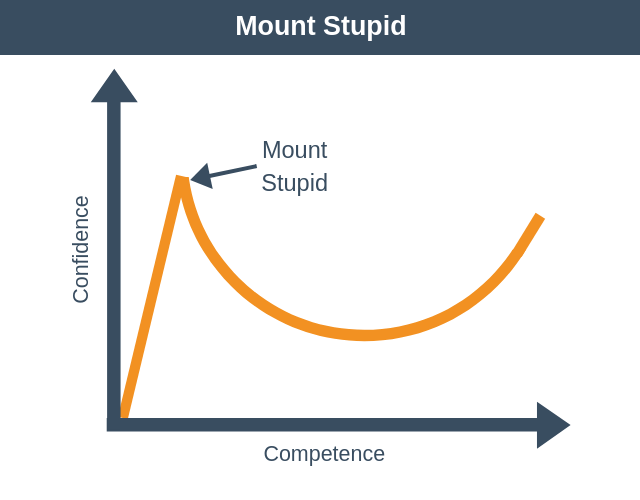
Finally in regard to ego, I have a hard time believing any decent coach would be happy with their athletes constantly overshooting and failing. Your coach should work with you to develop an approach that handles this well but if you find yourself not being able to take a step back and assess the situation to make smart decisions vs emotionally driven ones in the gym, maybe it’s time to take a closer look internally at your relationship with lifting heavy weights. This is an actionable item that can very quickly show a coach if you’re serious or not. If an athlete of mine regularly sends me failed lifts despite feedback and coaching that specifically tells them to avoid that and be conservative (rather than stupid) it’s a big tell that they aren’t “all in” as Dave Tate would put it. Consistency isn’t about just showing up. It’s about showing up and doing the appropriate amount of work over and over. Not less, not more. The faster you understand that as an athlete, the better progress you will make.
Conclusion
Obviously working with a coach is a multifaceted experience that ebbs and flows much like your training should. There are many right ways to coach an athlete as well as wrong ways. Finding a coach who not only aligns with your preferred training methods but you also get along with can be difficult. Once you’ve narrowed down someone and start working with them, it is your responsibility as the lifter to make sure you are executing well and getting the most out of their coaching and programming. Online coaching doesn’t allow for hand holding (and in person coaching shouldn’t allow for much of it either to be honest) so the discipline must come internally if you are to succeed. And if you drop the ball, don’t act surprised. Own and it and figure out how you’ll do better next time. There will almost always be another meet.
You don’t need a coach to succeed but if you are going to use one, truly use them. If all you want is validation, don’t bother using a coach, just squat in front of a mirror and give yourself a thumbs up after every set.
